Winter across Columbia County can bring cold snaps, wind, and long stretches when an exposed pipe gets little warmth. A small amount of preparation can help protect your plumbing from restricted flow, preventable clogs, and damage discovered after a trip away. Before the next freeze, walk through your crawl space, utility areas, kitchen, and outdoor connections. Northwest Plumbing Services can help with plumbing repairs, water and drain lines, repiping, fixtures, and water heaters; for a problem you cannot safely handle, call the office at (503) 366-1323 or email office@nwplumbingservices.com to discuss the next step.
Protect exposed pipes before a freeze
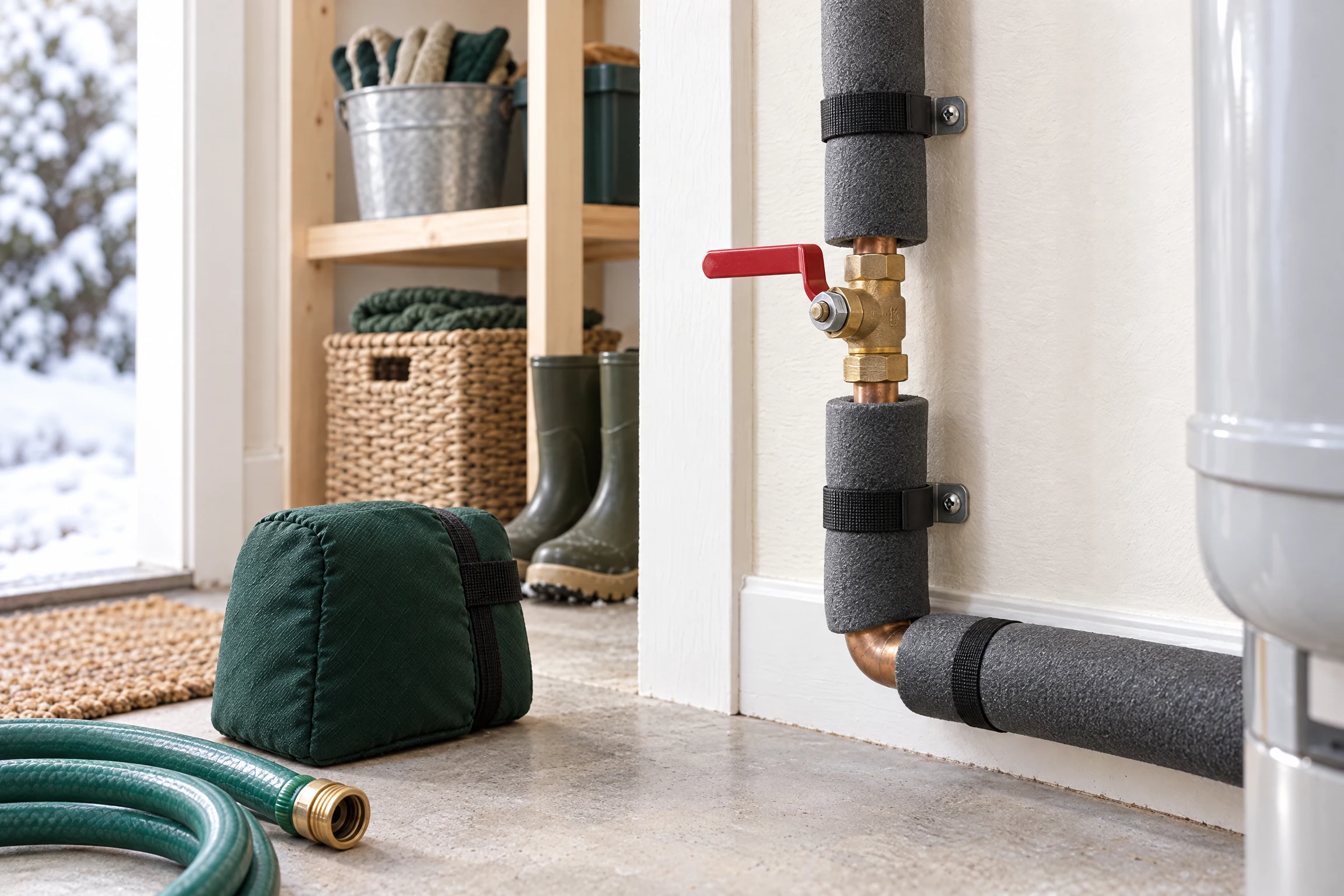
Look for water supply pipes in crawl spaces, garages, exterior walls, and other unheated areas. Foam pipe insulation is an inexpensive first step, but it should be fitted securely and kept clear of heat sources. Close garage doors when temperatures drop, and seal obvious drafts near plumbing without blocking required vents. For isolation and preparation context, review our Whole-Home Water Shut-Off Help guidance.
During especially cold weather, a small, steady trickle from a faucet served by an exposed line can keep water moving. Use this only when appropriate for the fixture and local conditions, and know where your main shutoff is located. If flow slows suddenly, a pipe may be freezing. Do not use an open flame; shut off the water if a break is suspected and contact a qualified plumber.
- Find and label the home’s main water shutoff before an emergency.
- Insulate vulnerable pipes and disconnect outdoor hoses before freezing nights.
- If a pipe bursts, turn off the main supply and protect nearby electrical equipment from water.
Keep winter cooking from clogging the kitchen drain
Cold weather often means more soups, roasts, and baking. Grease, oils, coffee grounds, fibrous scraps, and food particles can collect inside a drain even when the sink seems to empty normally. Let fats cool, place them in the garbage, scrape plates into compost or trash, and use a sink strainer. A disposal is not a substitute for sorting waste or running plenty of water while it operates.
If a drain slows, stop adding water and try a plunger suited to the fixture. Avoid relying on caustic liquid drain cleaners, which can injure people and complicate later repairs. Persistent backups, recurring odors, or more than one affected fixture may point to a larger drain-line concern and deserve professional evaluation.
Plan for plumbing while you are away
Before leaving Oregon for a weekend or longer, decide whether to shut off the main water supply. If you do, open faucets briefly to relieve pressure, but follow the instructions for any water heater, heating equipment, or fire-protection system in the home. Keep the heat set high enough to protect interior plumbing, and ask a trusted person to check the property after a hard freeze.
Homes with private wastewater or septic equipment may have additional cold-weather considerations, especially where a line leaves the house. Follow the system provider’s guidance rather than assuming every property has the same protection needs.
A practical next step
Use a mild day to inspect accessible pipes, test the main shutoff, and note any leaks, corrosion, low pressure, or slow drains. Northwest Plumbing Services also works with pipes, faucets, toilets, disposals, water and drain lines, repiping, tank and tankless water heaters, remodels, new construction, commercial plumbing, and accessible low-threshold Bestbath showers. Call (503) 366-1323 or contact the office to confirm the right service for your situation and current availability. For water-heater maintenance and planning context, review our Water Heater Service guidance.
Questions about this topic
What should I do if I think a pipe is frozen?
Turn off the main water supply if a break may have occurred, avoid flame or unsafe heaters, and inspect for leaks as the pipe thaws. Call Northwest Plumbing Services at (503) 366-1323 for guidance or repair planning.
Should I pour chemical drain cleaner into a slow winter drain?
It is safer to start with a suitable plunger and remove visible debris. If the drain remains slow or several fixtures back up, contact a plumber instead of adding a corrosive product that can make service more hazardous.